Equipment – Members Area
EQUIPMENT
Welcome to the Equipment area. The following advice is not a compulsory purchase list (except for helmets), but rather an ideal overview.
Some of you will have already have most of your gear and this section is aimed at being a supplementary aid about gear and the kind of conditions you must be prepared for.
If you haven’t already got the kit, most of the bigger high street shops should have most of what you need and we would advise buying as much as you can before you go.
SKIS
You should buy your own boots and skis for the course – this will work out cheaper than hiring kit.
The hardest part about buying the right pair of skis is knowing where to start! Here’s some handy advice to help you choose the right ski for you. Remember, your knowledge about skis is going to increase dramatically over the next few months, so initially we recommend that you buy a pair of skis that will help you whilst doing our instructor course.
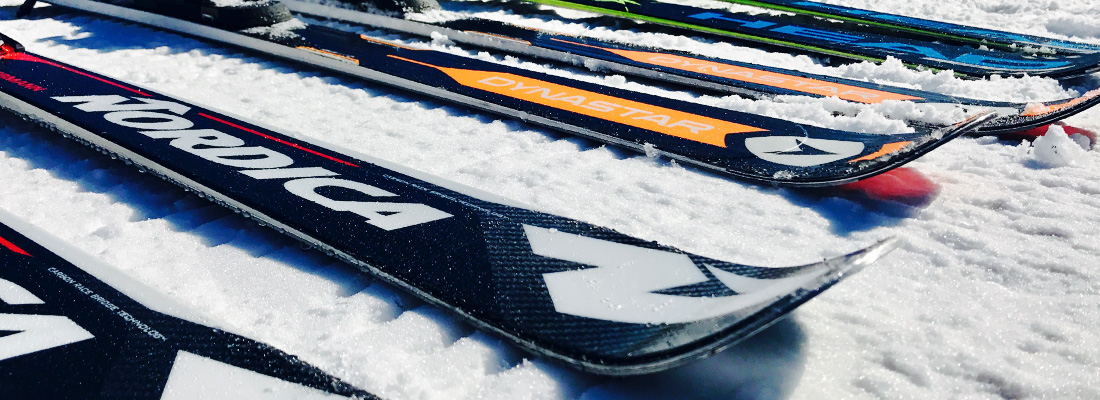
In order to get the most from your instructor training you should purchase a piste performance ski or an ‘All Mountain’ ski – these are the most ideal for the course.
OUR SIMPLE SKI GUIDE:
Here is our simple guide to choosing the best ski for you and your Peak Leaders course:
We know that there’s a huge choice of skis and all the terms can be a bit overwhelming, so in short here’s what to look for (and what to avoid):
- Choose a piste performance ski
- Avoid race skis – especially with a race plate (they will simply be too stiff to be versatile enough)
- Don’t bring an off-piste ski for piste skiing (they will be far too wide for piste skiing)
- Avoid twin tips (they are usually too soft and often too wide as well)
- Some “all mountain skis” that are narrower can be ok (check with us if you’re not sure)
- The width under foot ideally between 70 – 80mm (read more below)
- The length of the ski for piste performance should be 160cm – 175cm depending on your height
There are a huge number of skis like that fit these guidelines, so if you’re not sure just get in touch with us for some advice…
You might like to have a 2nd pair of skis for park or freeskiing, although we don’t recommend these skis for the course training and exams.
SKI WIDTH UNDER FOOT
It might seem small detail, but the wider a ski the harder it is to get grip and influence the ski – especially on hard packed pistes.
Essentially it makes it harder to ski on piste and harder to pass your exams. We think 80mm is possible but still making things hard.
So when trainees have a ski that’s 84 or 88 mm underfoot it’s really making things too difficult to pass the Level 1 and Level 2. And over 90mm is definitely an off-piste ski, not a piste ski…
OFF-PISTE MODULE
If you are doing the off-piste module you will also need off-piste skis with touring bindings and touring skins. Avalanche search equipment is also required (rucksack, avalanche transceiver, shovel and probe) and it’s usually better to buy your own, not rent.
BOOTS & POLES
You will need poles, bindings and boots too. Be very careful when buying boots not to buy them too big or too stiff. People regularly have boots one size too big. This is a result of the boots feeling comfortable in the shop. By the end of a week’s skiing,
however, these types of boots are usually like Wellingtons. Also around 90 – 100 flex is ideal for this level, a boot too stiff will put you in the back seat constantly.
Take your time and don’t rush buying your kit. If you’re planning ahead – buying kit at the end of a season is a great way to potentially pick up some bargains, but bear in mind that choice will be more limited than at the start of the season.
SOCKS
Look for thin, good quality ones. Wearing thick socks (or 2 pairs!) will cause your boots to rub and not fit properly and could reduce blood flow, actually making your feet colder. You can also keep your feet warmer by making sure your boots get dried every night.
SKI JACKET & PANTS
Make sure you check the waterproof rating – good quality ones should be at least 10,000. Lined pants with thermals underneath are the best way to stay warm.
Gore-tex is the best quality in terms of being water resistant.
THERMALS & LAYERS
Buying good quality thermals is just as important as a warm jacket. Winter thermals made from natural wool fibres are more expensive than synthetics but make a massive difference to keeping you warm and wicking away sweat. Check the labels before you buy to make sure. Thermals work best when they’re tight fitting. Layering is also important for keeping warm. A thin micro fleece can be a good idea, alongside long sleeve t-shirts.
HELMETS
Helmets are compulsory. They are good at keeping your head warm and, more importantly, in tact. Removable ear flaps are good when it’s warm. Geek gaps (space between the top of your goggles and helmet) are not only a mountain fashion faux pas but can also leave skin exposed and a very cold strip across your forehead – so make sure your goggles and your helmet fit together well…
FACE MASK
To avoid frost nip (the mild version of frost bite) on very cold days bring a face mask or a bandana or “doo-rag” to cover the gap between your goggles and top of your jacket.
GOGGLES & SUNGLASSES
There can often be flat light days (when there is no bright sunshine) during the course. If you are buying goggles try to get ones with both clear/orange lenses for when it’s snowing and reflective lenses for spring sunny days. If you wish to bring sunglasses too then they are handy for sunnier warmer days.
GLOVES
Mitts are the warmest type. Thin silk liners are advised if you suffer from cold hands. Gloves are very personal and spending a lot of money on gloves will not guarantee you will have warm hands!
AVALANCHE KIT
Although we never recommend riding off piste unless with a qualified guide, you should still have a thorough knowledge of how to use a transceiver/shovel/probe.
You will receive avalanche training as part of the course, for which you will need transceiver/shovel/probe. You will be able to hire this in resort but it is beneficial to become familiar with your own kit in case of any future use.
You can find deals on avalanche kit through Fluid Lines in the Pro-Deals section.
SKI SERVICING KIT
This is not essential but it is highly recommended, and will definitely save you money in the long run.
It is really important to keep your skis in the best condition to get the most out of training. We set up a ski servicing station on all our courses; so a work bench with clamps and an iron so you can easily keep your skis nice and sharp.
At the start of the course we show you how to service your skis, so it is really good for you to have a basic ski tech kit with you to use through the course. A basic kit means files, file guides, wax and p-tex for minor repairs – ideally your own clamps and iron too.
You don’t need a full set up – just a few files and guides and some wax is enough to get you going – we often have a bench and some clamps in the accommodation.
You can find deals on ski servicing kit through Fluid Lines in the Pro-Deals section.
A GOOD BAG
A good rucksack is really handy for carrying any extra kit to the slopes. On most courses we leave bags with extra layers, snacks and drinks and perhaps lunch in a room on the mountain.
In Saas Fee we recommend a boot bag rather than a rucksack. Most trainees and coaches walk to the lift and head up the hill in normal shoes, then switch to boots at the top.
SLIPPERS OR INDOOR SHOES
This might not be the fist thing on your list, but it’s dead handy…
In resort you always take your shoes off when you enter the accommodation – after all they’re usually wet and covered in snow.
So a pair of indoor shoes or slippers that stay dry and never get used outside are a really handy thing to pack.
BASI MANUAL
Everything with BASI is now online including the manual which is on the BASI App. If you would prefer a hardcopy of the manual then you can order one direct from BASI for £22 (before your course starts) and they will sent direct to your home address. You will be using them a lot through your course so it’s well worth considering.
A FEW OTHER THINGS….
Passport
A must for obvious reasons…
Bank / credit card
One that will let you withdraw money at non-UK cash points (or outside of your home country if you’re not British). Mmake sure you contact your bank in advance to say you will be using it abroad or they might put a hold on your account when you start using it abroad. This is a standard security thing and you usually need to inform them to start using your card again.
Mobile phone
Check with your provider for packages for texting/calling abroad so that you don’t get stung! You may want to buy a foreign SIM card in the country of your course and we are very happy to advise you on this.
Fitness clothing
Remember to bring trainers and clothes for running and doing fitness training.
Camera/video camera
We’ll be issuing prizes for the best photos/blogs/video edits during the course! So if you’ve got a camera that’s a massive benefit…
Laptop / tablet / music player
Keeping entertained and is invaluable. So being bale to plug-in and zone-out is important.
International plug adaptors
It’s a great idea to bring a power bank from your home nation and also an international adapter – so you can plug into a Swiss socket and still use your home nation electrical equipment.But remember that Swiss plugs are usually different from most of the rest of Europe.
If not you can buy adapters in resort too – they’re usually more expensive though.
Sun cream
A goggle tan is one thing – burning is another… So make sure you’re protected.
Personal First Aid Kit
Essential for dealing with any cuts or blisters.
The countdown is on …
#startyourjourney
MENU ITEMS: